2026-08-23 ·
How Louisville Winters Impact Underground Pipes
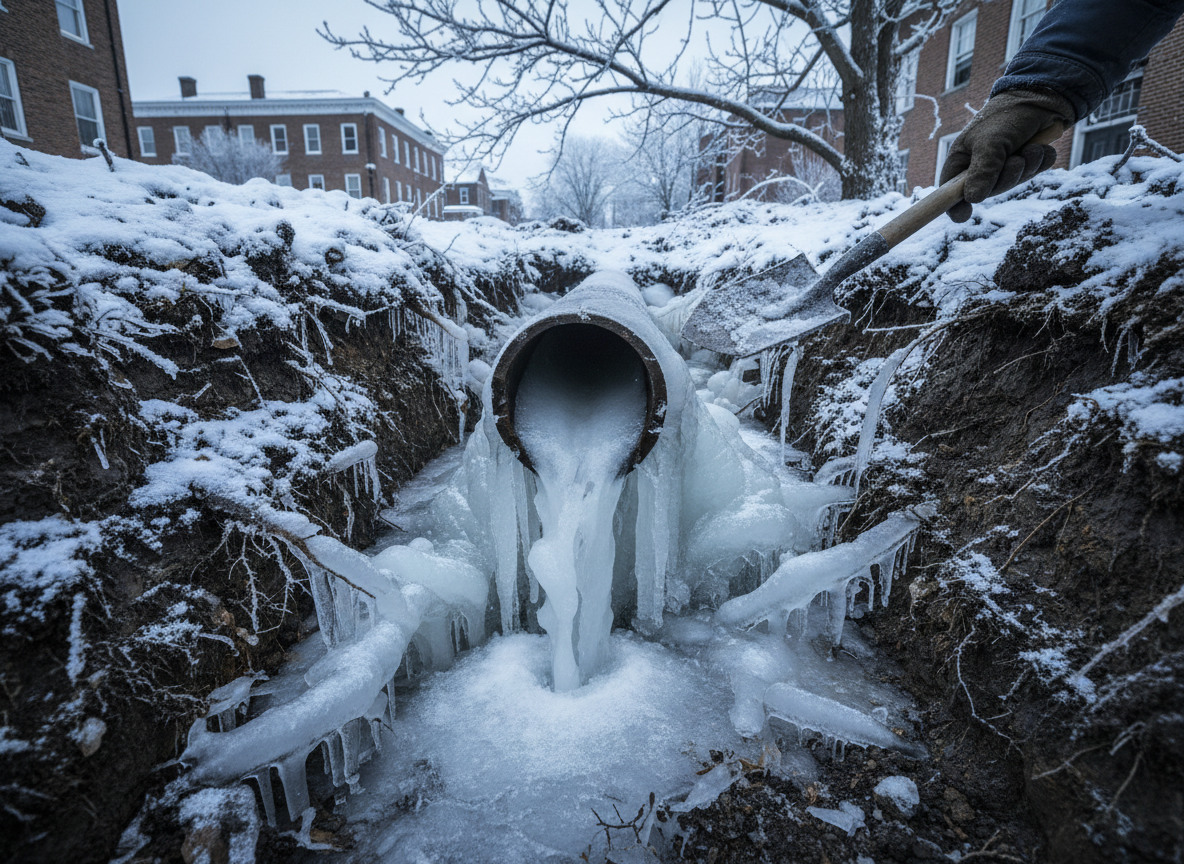
Louisville winters reach lows around 20–25°F several times each season, enough to freeze the top 6–12 inches of soil and create enough movement to stress cast-iron and clay sewer lines installed 40–70 years ago. In neighborhoods such as Old Louisville and The Highlands, where many homes predate 1950, these cycles often separate bell-and-spigot joints or hairline cracks that later allow groundwater infiltration during spring rains.
Freeze-Thaw Cycles and Soil Expansion
Jefferson County’s clay-heavy soils hold moisture through fall, then expand when they freeze and contract again during daytime thaws. This movement is most pronounced in The Highlands and Crescent Hill, where tree roots already crowd laterals. Pipes laid at standard 3–4 foot depths experience 1–2 inches of vertical shift per cycle; over 8–12 winter events the cumulative stress fatigues older materials. Homeowners notice slow drains or gurgling after the first hard freeze in late December. Video pipe inspection reveals displaced joints before they become full collapses. In contrast, newer PVC lines in St. Matthews subdivisions handle the same movement better because of flexible joints, yet even these can develop leaks where backfill was poorly compacted.
Effects on Aging Infrastructure in Historic Districts
Old Louisville and Butchertown contain dense concentrations of 4-inch clay laterals that have already endured decades of settlement. When the ground heaves, these rigid pipes crack at the 45-degree elbows common under front porches. Germantown and Clifton see similar issues where shotgun houses sit on shallow foundations; the short run from house to street main leaves little room for expansion loops. Downtown high-rises with larger mains experience less movement because pipes sit deeper, but service laterals feeding individual units still suffer. After repeated winters, root intrusion accelerates through new fissures, turning a small crack into a blockage by March.
Practical Steps for Louisville Homeowners
Check cleanouts in late fall before temperatures drop below 30°F. Clear any standing water that could freeze and exert extra pressure on joints. In Portland and Shawnee, where yards slope toward the river, ensure downspouts direct water away from pipe trenches to reduce saturation. Homeowners in Crescent Hill often schedule hydro jetting before Thanksgiving to remove grease and debris that narrow the pipe and make it more vulnerable to ice expansion. If slow drains appear after a freeze, avoid chemical cleaners; instead request a video pipe inspection to locate the exact point of movement before scheduling repair.
When Trenchless Methods Become Necessary
Once winter damage reaches multiple joints, trenchless pipe repair offers a way to restore flow without disturbing established landscaping common in The Highlands and Germantown. Pipe bursting replaces the old line through existing access points, while CIPP lining seals cracks from inside. Both approaches limit excavation to two small pits even when the lateral runs under mature trees or brick patios. Cost factors for trenchless pipe repair in Louisville vary with pipe diameter and access, but the method avoids the $8,000–$15,000 expense of full trenching in dense urban lots. Residents in Elizabethtown facing similar soil conditions have used the same techniques successfully on 1950s-era homes.
Closing Observations for Jefferson County Properties
Mild winters do not eliminate pipe stress; they simply spread it across more frequent, smaller cycles than northern cities experience. Tracking drain performance from November through March helps catch issues while they remain isolated to one or two joints. Properties in Old Louisville, The Highlands, and Clifton benefit most from proactive inspections because their infrastructure already carries the longest cumulative exposure. Keeping records of any winter slowdowns allows targeted repairs rather than whole-line replacement when problems finally surface.